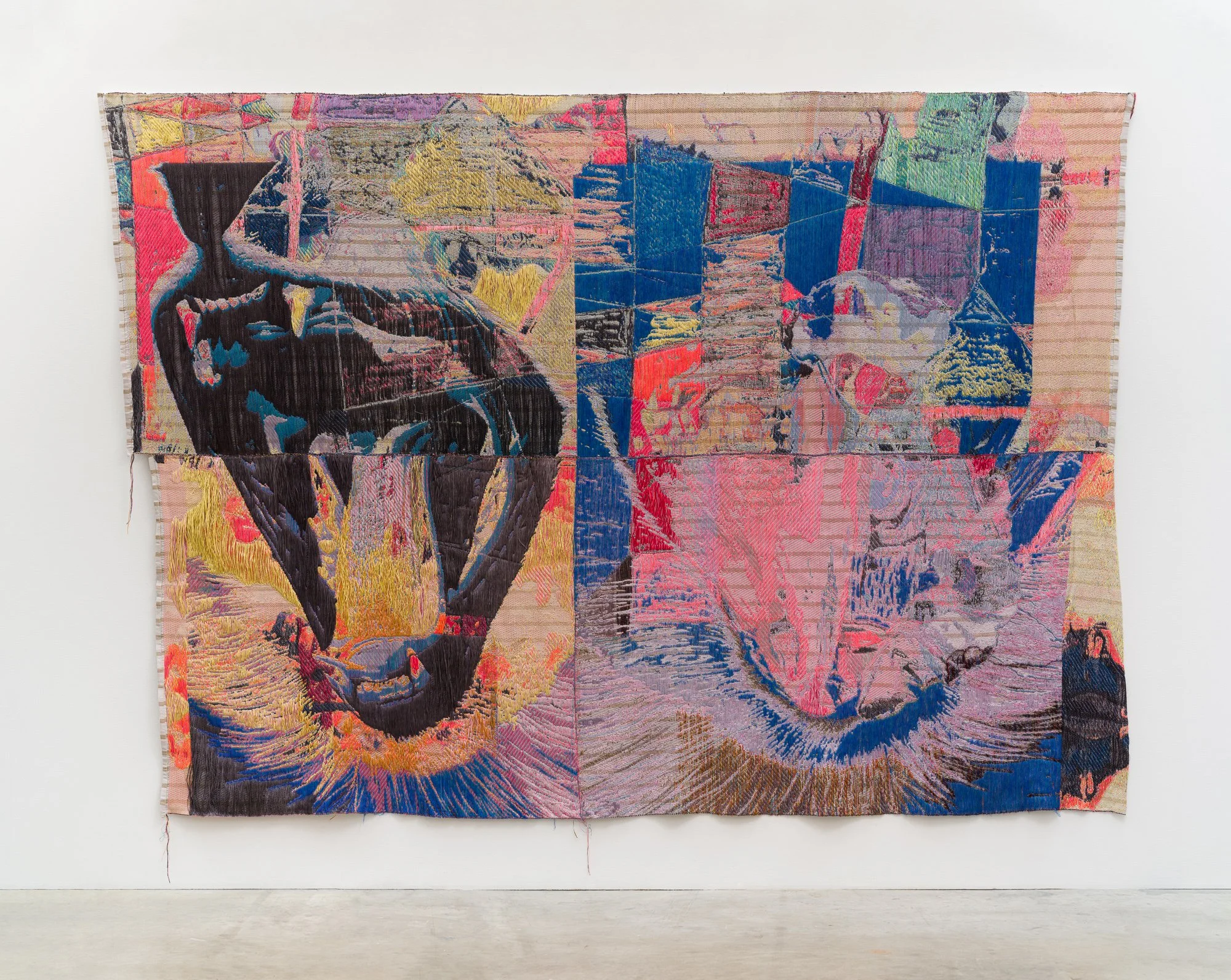
Socolofsky’s practice spans image-making, installation, and woven form, using layered and recursive structures to create interdependent fields of meaning.
Working with earth, minerals, animal and industrial materials, she engages the physical and cultural histories embedded in images and objects to examine broader social, ecological, and technological systems.

studio/ digital wovens
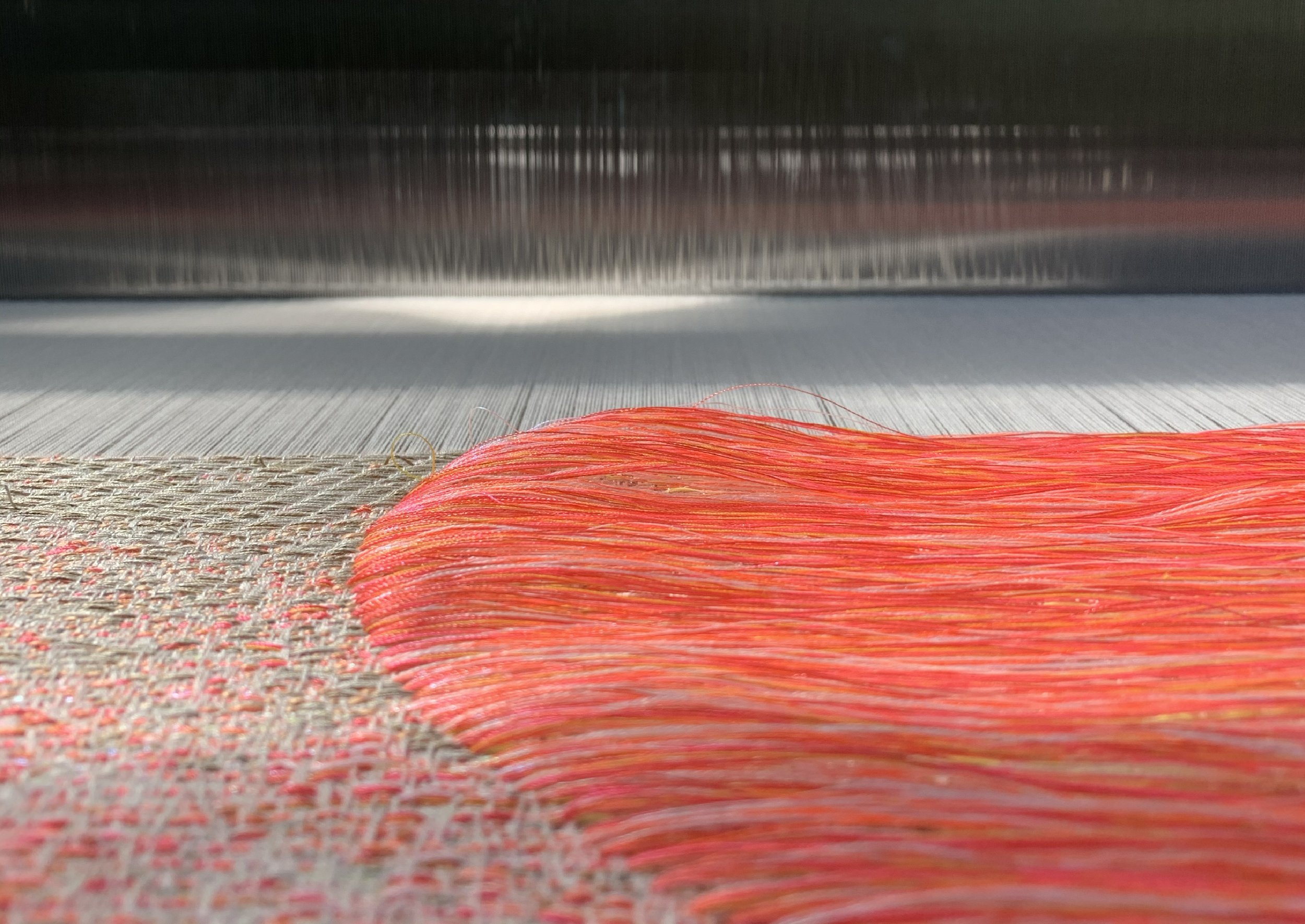
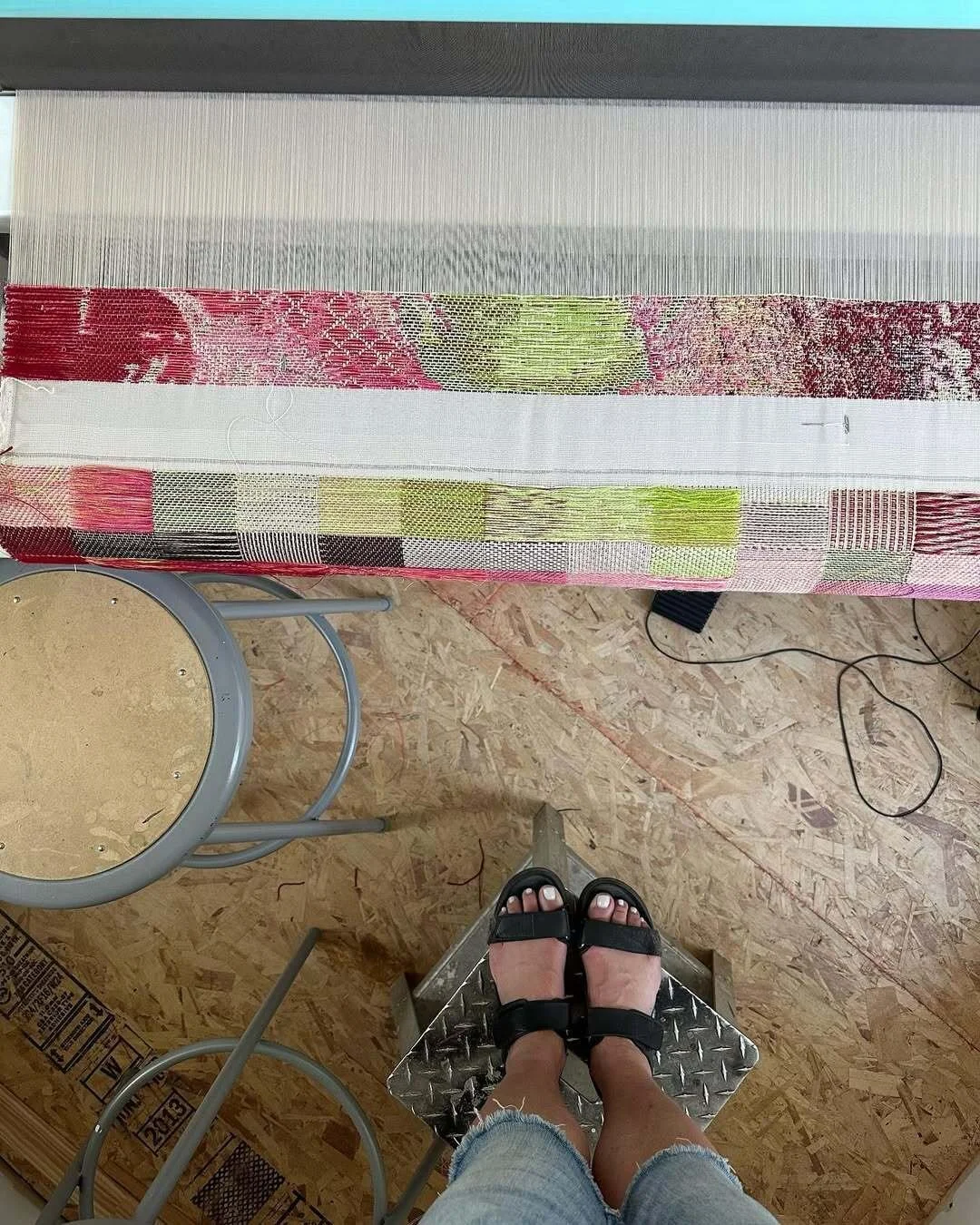
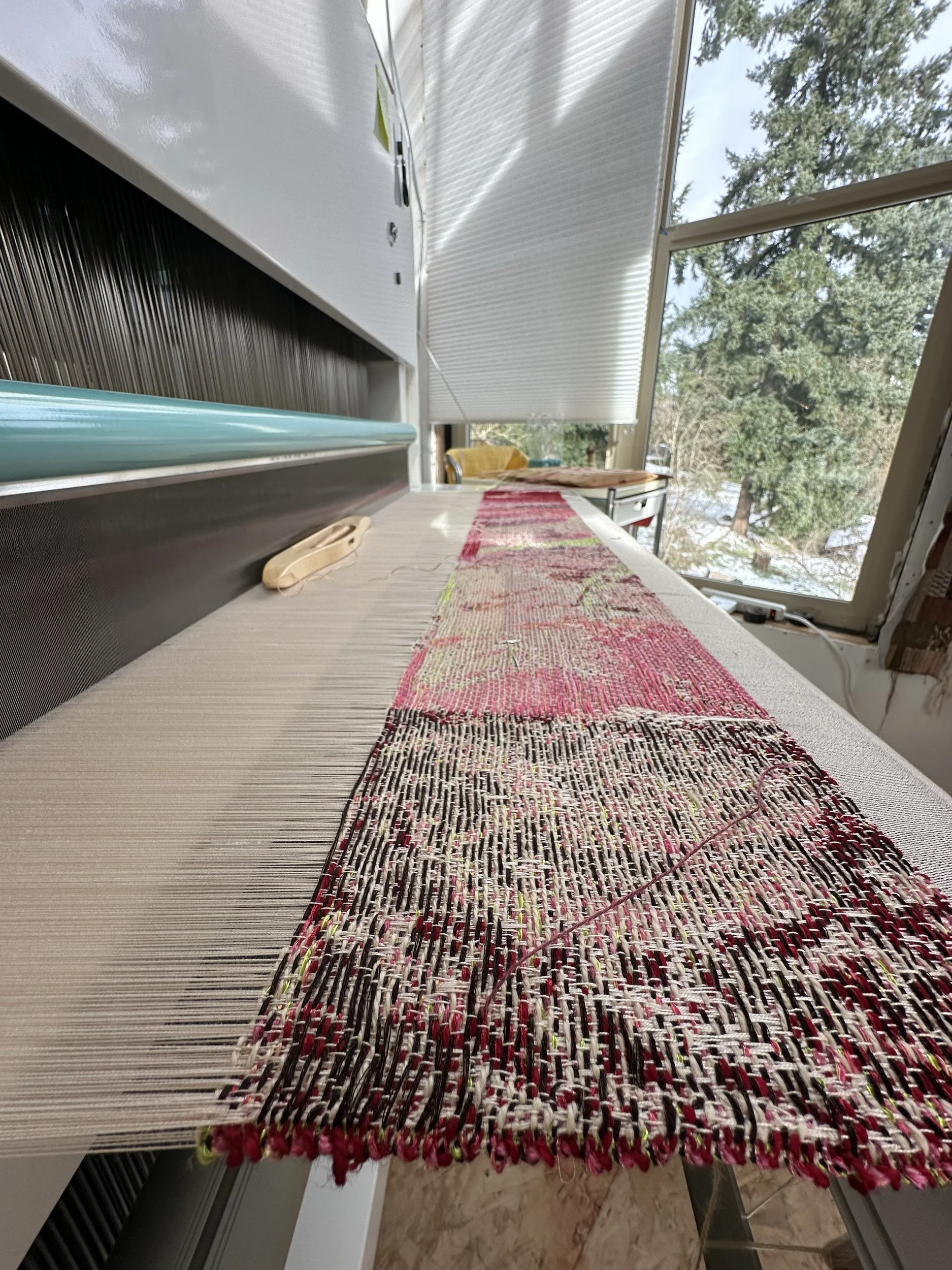
Working on the TC2 digital Jacquard loom, I translate images into computational weave structures that determine how thousands of individual warp threads rise and fall. Yet the weaving remains physical and embodied: I throw each shuttle by hand, responding to the cloth as it emerges.
studio/ frame loom wovens
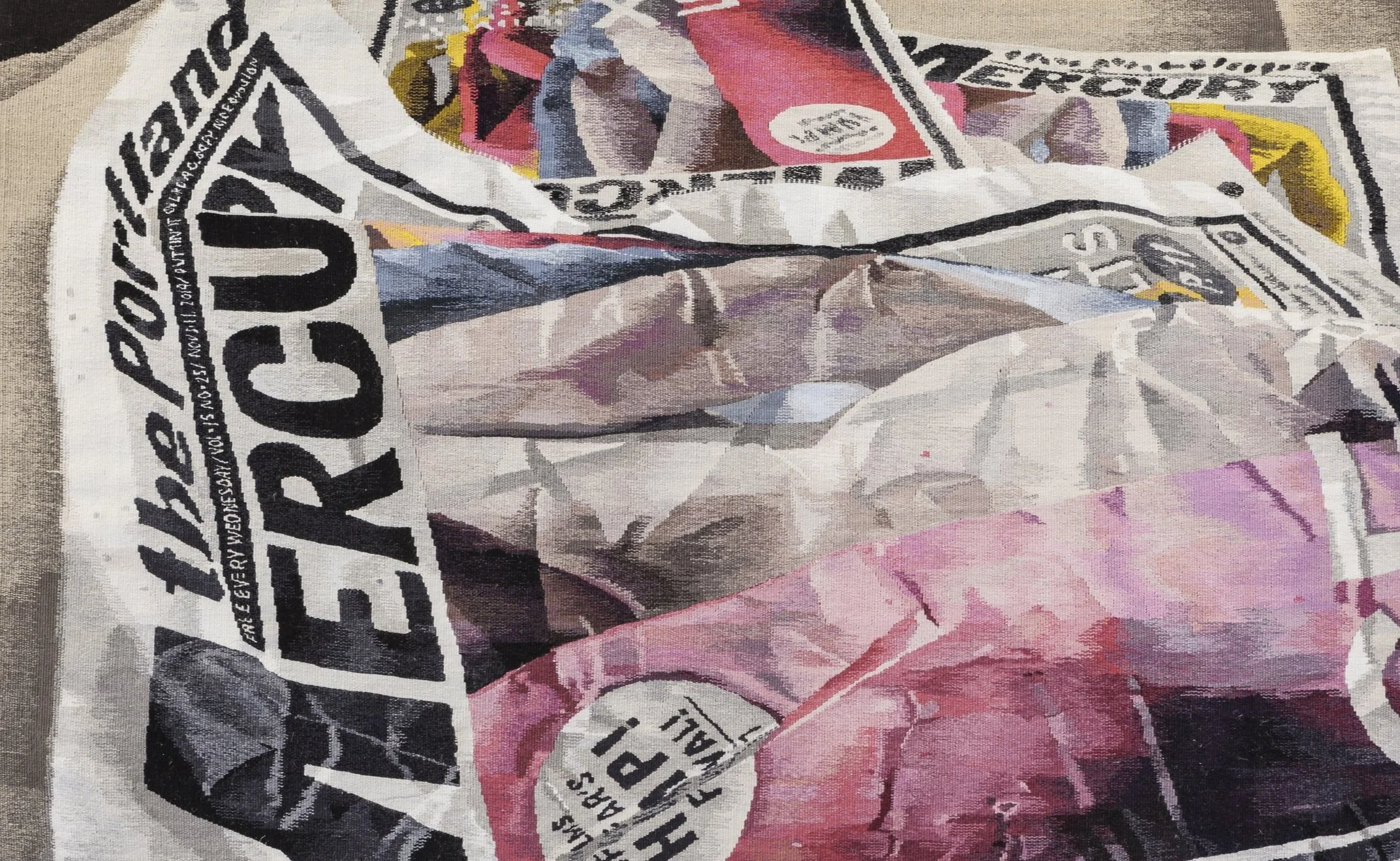
On the frame loom, that relationship is reversed. There is no code or automated selection; every shape is built manually through discontinuous weft, tension, gesture, and touch.
These two weaving systems are separated by centuries, yet both operate through the same fundamental logic - warp and weft, over and under, structure and pattern. Moving between them reveals the loom not as an ancient technology opposed to computation, but as part of a long continuum of systems for encoding, translating, and materializing information.
artist statement
My recent work interrogates the contemporary image by moving it through competing systems of translation—drawing, code, material, scale, and the hand. I am interested in what survives these passages, what disappears, and what new forms of information emerge when an image can no longer maintain its authority as a stable representation.
Within this framework I examine how landscape is made desirable, possessed, and controlled. I treat territory, infrastructure, and the body as entangled parts of the same unstable image.
My sources include aerial views, historical representations, contemporary image culture, and direct encounters with altered landscapes. These images move through a recursive exchange between hand and machine, including digital Jacquard and traditional processes. Translation introduces glitches, broken registrations, loose threads, and other structural failures that disturb the authority of the original view.
Natural dyes and industrial color intensify the collision between beauty and violence, seduction and extraction.
Rather than representing landscape as a passive scene, I approach it as a system shaped by expansion, technology, belief, and desire. The resulting works are material images: seductive surfaces that expose how beauty can make territory appear coherent, governable, and available for possession, while revealing the instability beneath the image.
Weaving becomes meaning and metaphor for contemplating memory, erosion, impermanence, continuity, and our place within deep time.
studio process
My work investigates what happens when living systems are translated through computational systems designed to observe, measure, and reconstruct them. Moving between drawing, photographic imagery, computational processes, and weaving technologies separated by centuries, I build recursive systems in which each translation becomes the source for the next. Distortion, error, and material resistance are not failures but evidence of what escapes the system—what remains unstable, unpredictable, and alive.