About

artist bio
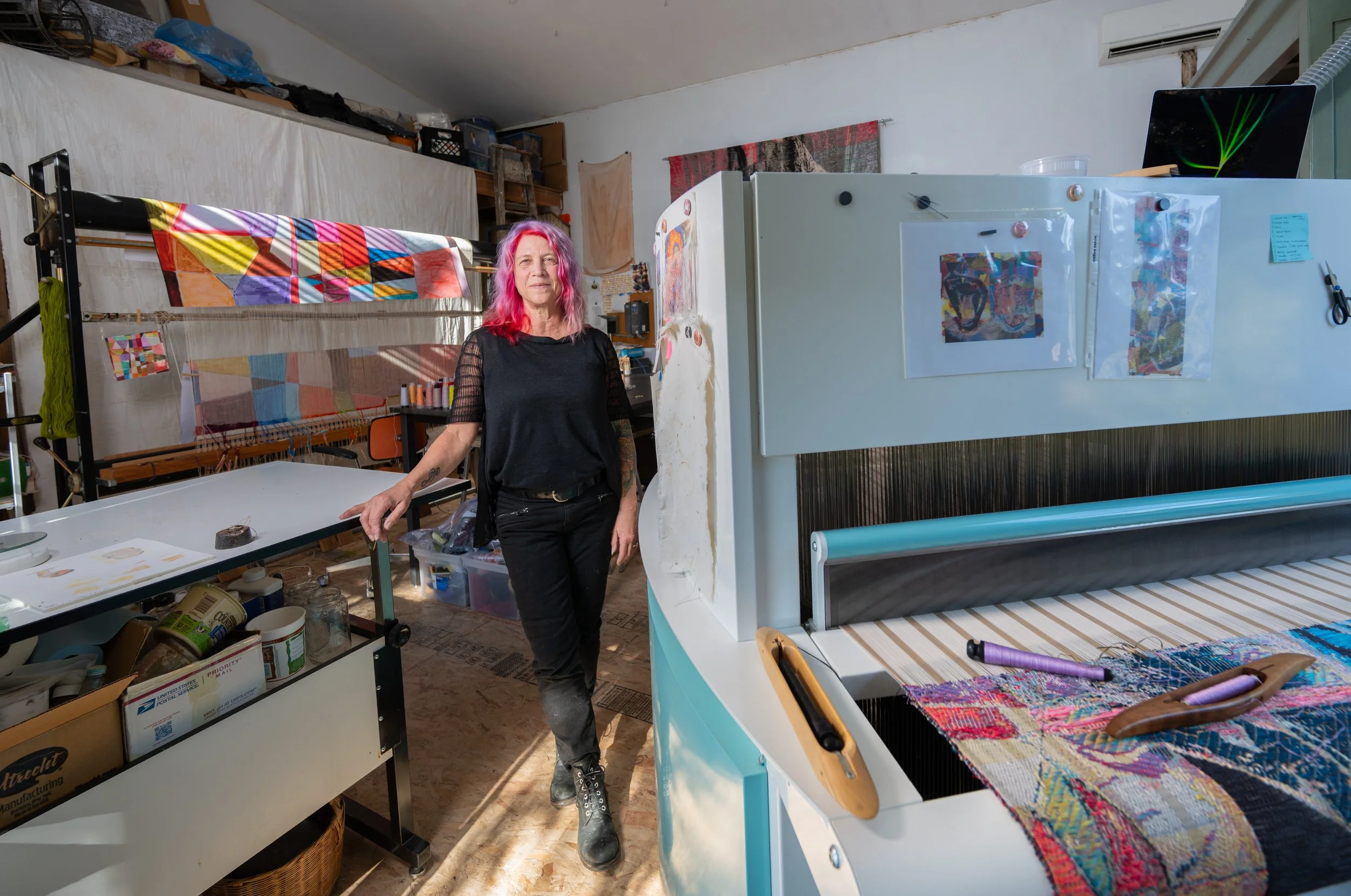
Shelley Socolofsky is a Portland-based artist whose practice investigates the instability of images and the systems through which meaning, knowledge, and authority are produced.
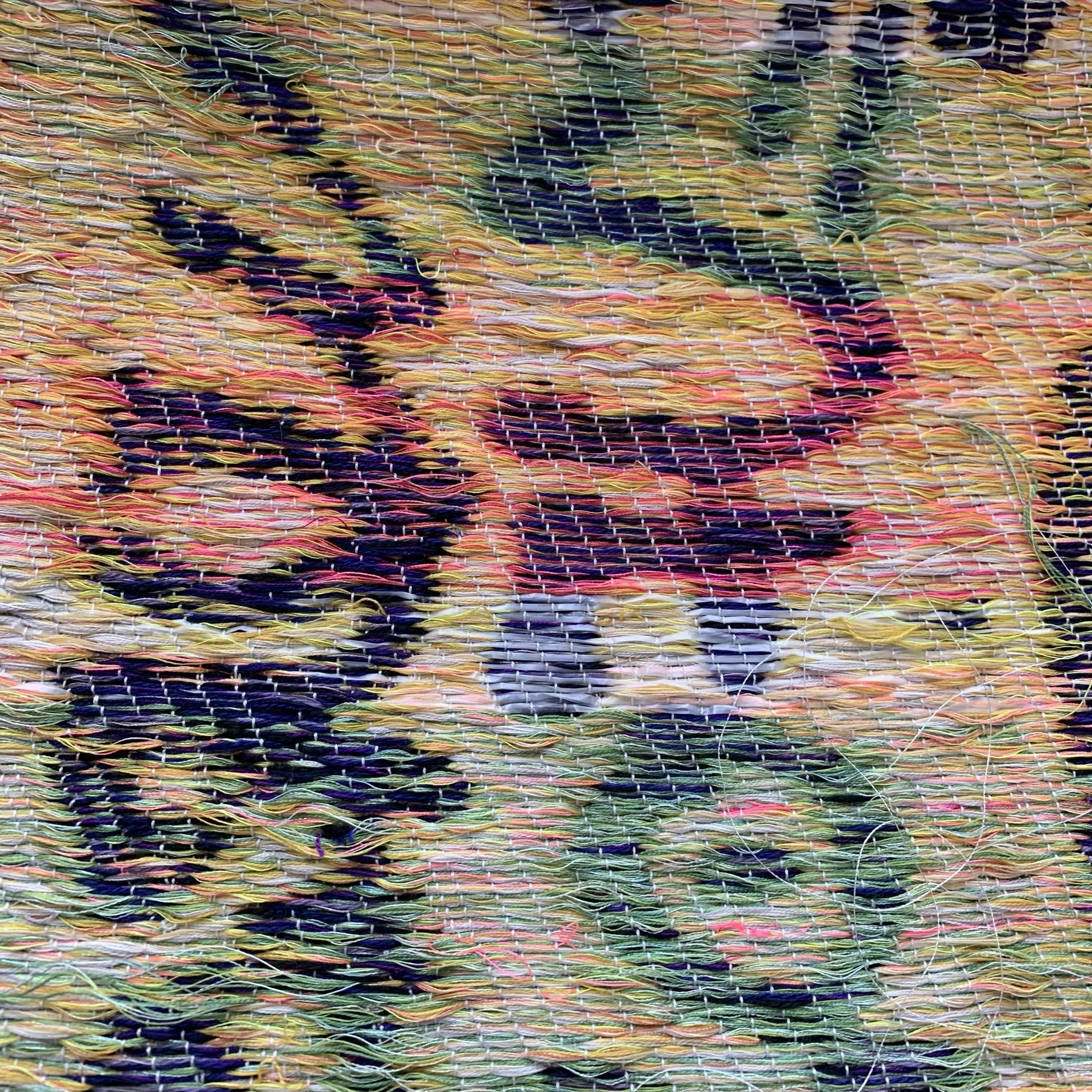
Working across woven painting, digital imaging, and hybrid material forms, she subjects images to processes of translation, layering, distortion, and re-encoding. Combining hand-dyed fibers colored with plant roots, barks, insects, and mineral ores with industrial synthetics, she creates woven surfaces where historical and contemporary technologies converge.
Recent solo exhibitions include s’hade garden, Vanderbilt University, the forthcoming DaisyWorld, QFA Museum, Weaving Data curated by Theo and Nancy Downes-Le Guin at the Jordan Schnitzer Museum of Art; Material Turn at FOFA Gallery, Montreal; and Innovation Thru Pixels in Sundvolden, Norway. A recent recipient of the Astra Zarina Fellowship from the Civita Institute and artist-in-residence in Civita di Bagnoregio, Italy, her work is held in numerous public collections with recent publications through Digital Weaving Norway, Artist Magazine, Taiwan, and ETN ArTapestry7.
Socolofsky is currently on the faculty at Schnitzer School of art + Art History + Design at Portland State University.
artist statement
My art practice and research investigate how images, information, and embodied knowledge are transformed as they move between systems.
Working across drawing, digital processes, weaving, and installation, I bring lineages of textile encoding and production into collision with contemporary systems of data mapping and computation. Geographic information intersects with mappings of voice, sound, gesture, and ritual, producing material records in which different histories and ways of knowing occupy the same unstable terrain.
At a moment when landscapes, bodies, and human behavior are increasingly understood through data, my work asks what is altered or lost when lived experience becomes information. Recursive processes move images and data between hand, code, loom, and material, allowing each translation to disrupt the authority of the one before it. Often operating as cybernetic feedback loops, the work continually folds its outputs back into new inputs. Material resistance, error, bodily gesture, and memory interfere with computational logic, making visible what systems cannot fully contain.
Weaving becomes both object and information system: a place where data returns to matter, and where mapping becomes something provisional, embodied, and alive.
research
My research into loom technologies, from ancient analog frame systems to the contemporary digital TC2 loom, examines weaving as both a material practice and an information system. Cloth is often understood as functional or decorative, yet it is also one of humanity’s oldest technologies for encoding knowledge, power, and memory. By tracing the loom’s evolution, I explore how textiles have always been more than fabric: they are structures of communication, archives of labor, and networks of meaning that remain urgently relevant today.
Weaving is an ancient form of computation. Long before digital code, the loom operated through binary logics of warp and weft, presence and absence, pattern and interruption. This lineage extends beyond cloth itself into other early information-carrying systems, such as the Andean quipu - knotted cords used to record data, history, and governance. The quipu demonstrates that fiber has long served as a medium for storing and transmitting complex social information. In this sense, textiles are not peripheral to technological history but central to it.
The TC2 digital loom has only been in production since 2000. This loom translates pixel-based imagery into woven structure, making this continuity visible. Unlike the Jacquard loom (hand and industrial), which uses punch cards to reflect a binary system in which to translate instructions to the loom, The Thread-Counter TC loom bridges handcraft and algorithm, relies on Tiff files programmed using weave drafts overlayed and instructed by the designer, then transferred to a language the loom can understand. Such a process reveals how contemporary digital systems are deeply entangled with ancient material intelligence. The loom becomes a site where code takes physical form, where data becomes texture, and where the virtual is grounded in the tactile. By working with this technology, I question what it means to “read” an image or a pattern when it is embodied in thread rather than on a screen.
Erik Davis’ TechGnosis: Myth, Magic and Mysticism in the Age of Information provides an important lens for this inquiry. Davis writes about the persistent mystical and mythic dimensions that haunt modern technologies, suggesting that digital culture is never purely rational but carries echoes of spiritual longing, hidden systems, and unseen networks. Weaving, too, holds this duality: it is simultaneously technical and symbolic, material and metaphysical. The loom’s rhythmic process evokes devotion, while its patterns suggest coded messages, protective talismans, or maps of invisible structures.
In the present moment, systems of information are increasingly tied to surveillance, extraction, and control. Data is gathered, tracked, and woven into algorithmic profiles that shape daily life. I see parallels between the interlacing of threads and the interlacing of contemporary surveillance networks—both produce fabrics of visibility and constraint. My work asks how textiles might help us understand these systems differently: not as abstract flows of information, but as constructed, embodied, and politically charged structures. Through weaving, I engage cloth as a living interface between past and future. By connecting the quipu, the frame loom, the Jacquard loom, and the TC2 digital loom, my practice reveals a continuous history of fiber as technology and textile as knowledge. In making woven works today, I seek to reclaim the loom as a critical tool: a way to reflect on how information is carried, how patterns shape perception, and how ancient techniques can illuminate the hidden architectures of our digital present.
Shelley Socolofsky’s work investigates the intersection of touch and code.
Exploring a layered perception of embodiment through the entanglements of technology, ritual, and gesture, her practice is situated within relationships between ancient weaving technologies and modern computers. Creating handwoven tapestries, collage, digital imaging and drawings, these works exude surface and imagery that suggest complex records of deep time and narrative.